What this page covers. This page explains how photograph requirements are set, who takes the photograph, and where the governing specification is published. It is an orientation rather than a specification, and it deliberately omits dimensions, file sizes and time limits, which are revised without notice and are reliable only at their source.
There is no single federal photograph standard. A widespread assumption is that one specification governs every immigration photograph. It does not. Under 8 C.F.R. 103.2(a)(1), a benefit request filed with U.S. Citizenship and Immigration Services must be executed in accordance with the instructions for the particular form, and those instructions govern even where a provision of 8 C.F.R. chapter I says otherwise. The naturalization photograph regulation, 8 C.F.R. 333.1(a), is drafted the same way: photographs are to be furnished as prescribed by USCIS in its form instructions. The obligation therefore attaches to the individual form, and it varies from form to form.
Most photographs are captured by the government rather than supplied by the applicant. For an applicant inside the United States, the photograph that matters is generally taken by USCIS itself. After a filing is receipted, the agency schedules a biometric services appointment at an Application Support Center, where fingerprints, a photograph and a signature are collected; the appointment is noticed on Form I-797C. The authority to require that collection is 8 C.F.R. 103.2(b)(9), which permits USCIS to require an applicant, petitioner, sponsor or beneficiary to appear for biometric collection. Failing to appear without good cause can lead the agency to treat the underlying application as abandoned and deny it.
When photographs must still be furnished. Supplied photographs remain the rule in consular processing and in a limited set of USCIS filings. An applicant for naturalization residing outside the United States is asked to submit passport-style photographs, while an applicant residing inside the United States generally is not. Applicants attending an immigrant visa interview, and selectees in the diversity visa program, are asked to bring printed photographs to the interview. How many are required, and in what form, is stated in the instructions for the particular form or application and nowhere else.
The consular requirement rests on separate regulations. Photographs for nonimmigrant visas are governed by 22 C.F.R. 41.105(b)(3), and photographs for immigrant visas by 22 C.F.R. 42.65(f). Both leave the number and the specification to the Department of State rather than fixing them in the regulation, and both are drafted around electronic submission: the applicant uploads a digital image as part of completing the online visa application, and furnishes a paper photograph only at the direction of the Department or the consular officer. Both also provide that the photograph is treated as signed when the applicant executes the application form.
A digital image and a printed photograph are different objects with different rules. The image uploaded with an online visa application is subject to a file specification governing aspect ratio, pixel dimensions, color depth, file format, file size and compression, while a printed photograph is subject to a physical specification of trim size and head placement. An image that satisfies one does not automatically satisfy the other, and an existing print that is to be scanned for upload must satisfy both the print rules and the scanning rules. Conflating the two is a common cause of a rejected upload.
USCIS directs applicants to the Department of State specification. The agency does not maintain a separate published composition standard of its own; its form pages refer applicants to the Department of State photograph specification. The practical consequence is that the composition rules described below are the State Department's, and they apply to USCIS filings that call for a passport-style photograph as well as to visa and passport applications.
Composition. The photograph must be in color and taken against a plain white or off-white background free of shadows, texture and objects. The subject faces the camera directly, without tilting the head, with the head centered and entirely visible and the eyes looking at the camera. The expression must be neutral, with both eyes open and the mouth closed. Side and angled views are not accepted, and only the applicant may appear in the frame. Lighting should be even, so that no shadow falls across the face or the background.
How recent the photograph must be. Every photograph requirement includes a limit on the age of the image, and the limits are not uniform. The Department of State applies one window to visa and passport photographs, and USCIS form instructions apply a considerably shorter one to photographs submitted with a filing. Because the two differ, and because either can be revised, the applicable period should be read from the instructions for the specific form or application rather than assumed.
Eyeglasses are not acceptable. Older guidance told applicants to wear glasses if they normally wore them, and offered advice on tilting the head to avoid glare. That position has been reversed. Eyeglasses must be removed for the photograph, and must not be rested on the head. A narrow exception exists where glasses cannot be removed for a documented medical reason, such as eye surgery, and it requires a signed statement from a medical professional; even then the frames must not cover the eyes, and there must be no glare, shadow or refraction obscuring them. Sunglasses and tinted lenses are not acceptable in any circumstance.
Head coverings. Hats and head coverings must be removed unless worn daily for religious purposes or required for medical reasons, and the exception is documented rather than assumed: a signed statement confirming that the covering is religious attire worn daily in public, or a practitioner's statement in the medical case. Where a covering is worn, the full face must remain visible, nothing may shadow or obscure any part of the face, and the covering itself should be of a single color without patterns or perforations. A covering that hides the hair or the hairline is not acceptable.
Face coverings and other obstructions. A mask, veil or other covering that prevents adequate identification is not acceptable, and an ordinary medical mask must be removed. Headphones, wireless hands-free devices and similar items may not be worn. A hearing device or comparable article worn daily is permitted.
Clothing. The applicant should wear clothing normally worn on an ordinary day. A uniform, clothing that resembles a uniform, and camouflage are not acceptable; the exception is religious clothing worn daily. That rule disposes of the older advice about military and airline personnel photographed in service headgear.
Alteration and provenance. The photograph must be the original, unedited image, without filters, retouching or digital changes of any kind. An image copied or scanned from a driver's license or another official document is not accepted, and neither is a photograph cut from a magazine, a low-quality vending machine or mobile telephone image, or a full-length photograph. Where a print is digitally reproduced, the result must be free of visible pixelation and dot patterns.
Naturalization photographs are signed. A requirement absent from most general guidance sits in 8 C.F.R. 333.1(b): the applicant signs each copy of the photograph on its front, using the full true name and in a manner that does not obscure the features. An applicant unable to write may sign by mark, and an applicant for naturalization signs in English unless exempt from the English language requirement of 8 C.F.R. part 312 and unable to sign in English. A parent or guardian signs for a child who cannot sign. Under 8 C.F.R. 333.1(d), photographs are signed at filing only where the form instructions require it, and otherwise at whatever later point in the process is appropriate. Attachment of the photograph to the document issued is governed by 8 C.F.R. 333.2.
Meeting the specification is not the same as acceptance. A published specification describes what will ordinarily be accepted; it does not bind the officer who examines the photograph. Acceptance of an image or a print rests with the embassy or consulate where the application is made, or with the USCIS officer adjudicating the filing. Nor does a conforming photograph carry substantive weight: it evidences identity and appearance and nothing more, and it establishes no entitlement to the benefit sought. A defective photograph does not decide an application either, but it reliably produces a rejected package, a request for evidence or a wasted appointment, which is why it deserves attention out of proportion to its legal significance.
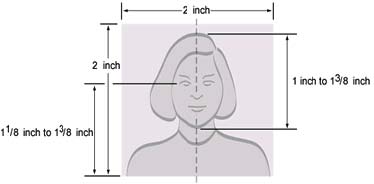
Head position and placement. The illustration below shows the intended framing: the head centered in the frame, the whole head shown from the crown to the chin, and the subject squared to the camera.
Well-composed photographs. The examples below satisfy the composition rules described above.

Two common faults. The comparison below sets two of the most frequent composition errors beside acceptable equivalents.
| Not acceptable | Acceptable |
| Head not facing the camera | Head facing the camera |
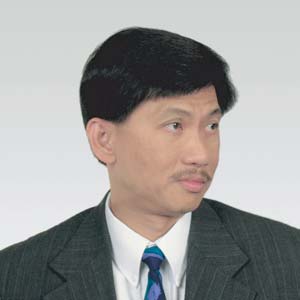 | 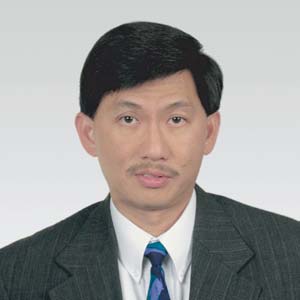 |
| Background not plain | Plain background |
 |  |
Where the current specification is published. Two sources control, and each is authoritative in a way a summary cannot be. The instructions for the particular form or application state whether a photograph is required, how many, and in what medium. The Department of State photograph requirements state the composition rules and the digital image specification. Where the two appear to differ, the form instructions govern the filing to which they attach.
Related pages. For the parent section of this handbook, see Other Matters. For travel authorization while an application for adjustment of status is pending, see Advance Parole. To discuss the requirements for a specific filing, see Contact.